Copyright Protection: Protecting Creative Works in the Digital Age
Protect your creative works online with Shieldify IP. Discover how copyright monitoring, evidence collection, infringement review, and enforcement help combat unauthorized use.
The digital economy has made it easier than ever to create, publish, distribute, and monetize original content. At the same time, it has dramatically increased the risk of unauthorized copying, redistribution, impersonation, and commercial exploitation. For businesses, creators, publishers, software companies, and other rights holders, effective copyright protection is therefore an important part of protecting both intellectual property and commercial value.
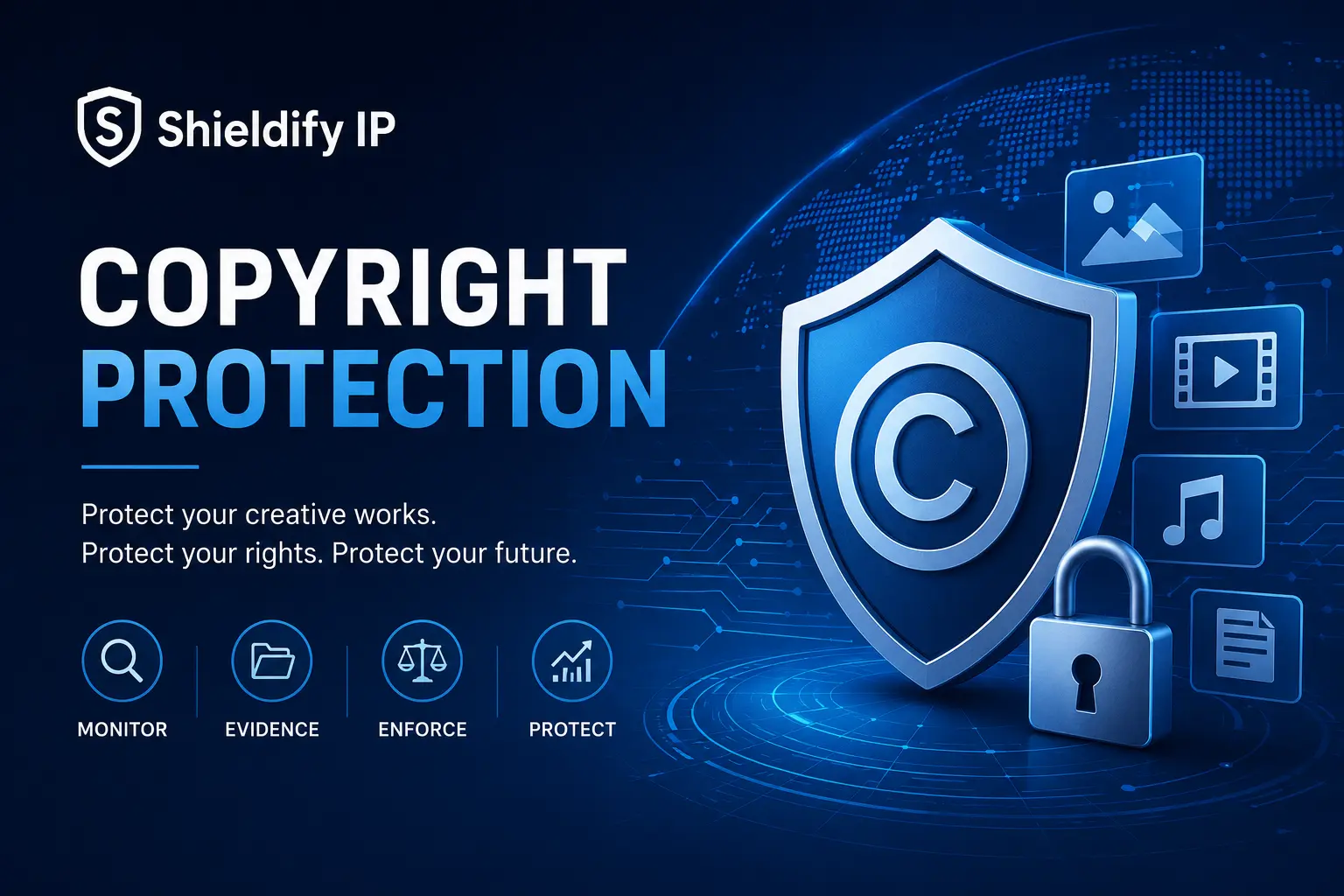
At Shieldify IP, copyright protection is approached as an ongoing process that combines monitoring, evidence preservation, infringement assessment, and enforcement.
What Is Copyright Protection?
Copyright protects original works of authorship and generally gives rights holders control over how their works are reproduced, distributed, displayed, performed, or adapted, subject to the applicable law and its limitations and exceptions.
Copyright-protected materials may include:
- Photographs and visual artwork
- Videos and audiovisual content
- Music and sound recordings
- Written articles and publications
- Website content
- Product photographs and marketing materials
- Software and source code
- Graphic designs and illustrations
- Educational and digital content
Unlike trademarks, which primarily protect signs that identify the commercial source of goods or services, copyright focuses on protecting original creative expression.
Copyright Infringement in the Digital Environment
Online copyright infringement can take many forms. A photograph may be copied from an official website and used by an unauthorized seller. Videos may be downloaded and re-uploaded to another social media account. Articles may be reproduced on competing websites without authorization. Digital products may also be redistributed through websites, social networks, file-sharing services, or other online channels.
For rights holders, the problem becomes more difficult when infringing material is distributed across multiple platforms or repeatedly reappears after removal.
A single takedown may address an individual URL, but effective copyright protection often requires a broader strategy.
The Shieldify IP Copyright Protection Process
Shieldify IP supports rights holders through a structured enforcement workflow designed to identify infringements, preserve relevant evidence, and facilitate appropriate enforcement actions.
1. Rights and Asset Identification
Effective enforcement begins with understanding what needs to be protected.
Relevant copyright assets can be documented together with supporting information concerning ownership, authorization, original publication, registration where applicable, and other materials that may help establish the rights holder’s position.
2. Online Monitoring
Potentially unauthorized uses can occur across websites, social media platforms, marketplaces, video-sharing services, and other digital channels.
Monitoring helps identify suspicious content and provides rights holders with greater visibility into where and how their creative works may be used without authorization.
3. Evidence Collection
Reliable evidence is an important part of an enforcement process.
Shieldify IP’s workflow focuses on documenting relevant information associated with potential infringements, which may include URLs, account or page information, screenshots, publication details, timestamps, and other available evidence.
Preserving this information can also be valuable where content is subsequently modified or removed.
4. Infringement Review
Not every use of copyrighted material necessarily constitutes infringement.
Before enforcement, the relevant content and available information should be reviewed in context, including ownership, authorization, applicable exceptions or limitations, and platform-specific requirements.
This review helps reduce inaccurate or unsupported enforcement requests.
5. Takedown and Enforcement
Where an infringement is sufficiently supported, an appropriate notice or platform reporting mechanism may be used.
Depending on the circumstances, enforcement may involve copyright reporting systems, hosting-provider notices, platform intellectual-property forms, or other appropriate procedures.
Each platform can impose different evidentiary and procedural requirements, making accurate documentation particularly important.
6. Case Tracking and Reporting
Submitting a copyright notice is not necessarily the end of an enforcement matter.
Cases may require follow-up, additional information, review of platform responses, or further action when infringing material remains available.
Structured case tracking provides rights holders with a clearer record of reported URLs, enforcement actions, outcomes, and supporting evidence.
Beyond Individual Takedowns
Modern copyright protection should not be limited to reacting to isolated infringements.
Repeated unauthorized use can indicate a broader infringement pattern involving related accounts, websites, pages, sellers, or distribution networks. Identifying these patterns can help rights holders prioritize enforcement resources and develop a more effective long-term protection strategy.
For organizations managing large copyright portfolios, centralized records are particularly valuable. They provide greater visibility into enforcement history and help maintain consistent documentation across multiple cases.
Protecting Creative Value
Copyrighted content can represent significant creative and commercial investment. Unauthorized reproduction can undermine licensing opportunities, divert audiences, facilitate counterfeit activity, and weaken control over how original works are presented online.
A structured copyright protection program helps organizations move from reactive takedowns toward continuous intellectual property management.
Shieldify IP combines monitoring, evidence workflows, case management, and enforcement support to help rights holders identify and address unauthorized uses of copyrighted works across the digital environment.
Protecting creative works is not simply about removing individual pieces of content. It is about maintaining control over valuable intellectual property and building a sustainable enforcement framework for the digital age.
This article provides general information about copyright protection and does not constitute legal advice.