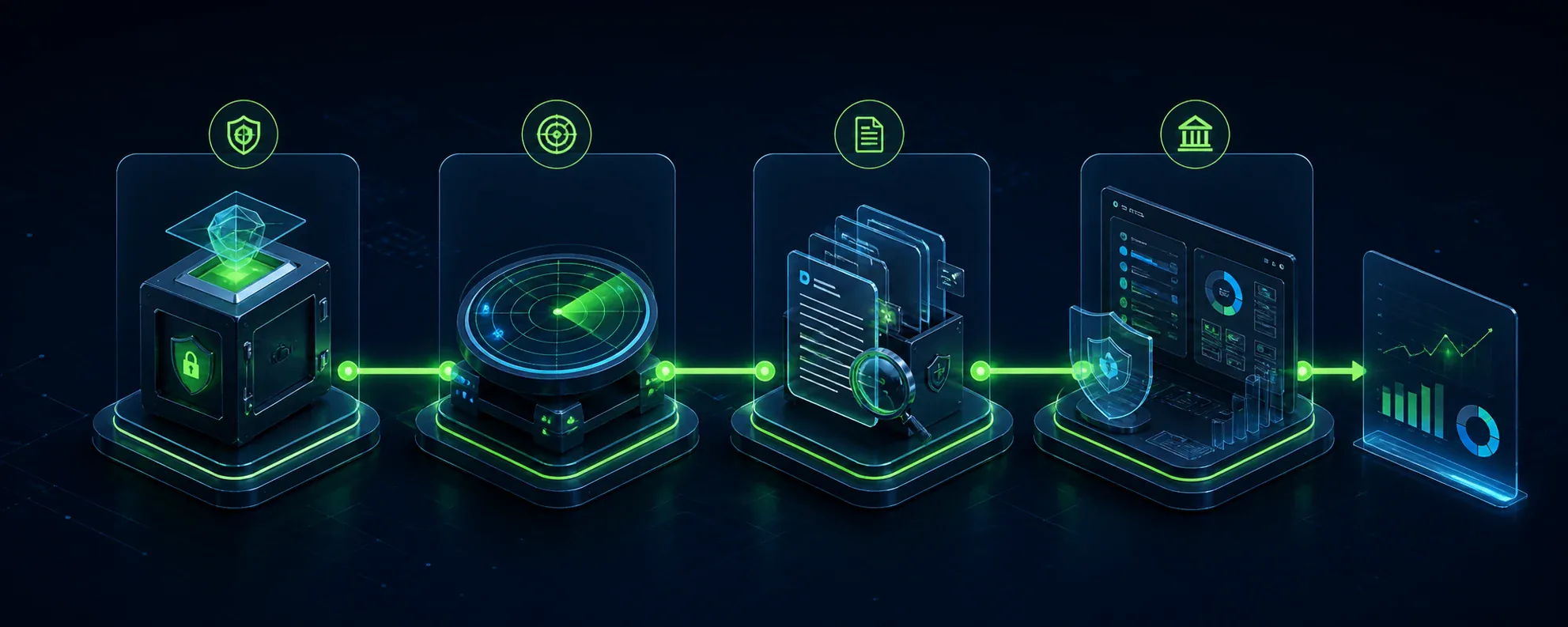
Portfolio Complexity
Rights, territories, business units, clients and authorized representatives can create different review requirements.


Coordinate portfolio monitoring, evidence standards, case queues, review responsibilities and stakeholder reporting across teams and territories.

Law firms and enterprises may manage many rights, business units, territories, representatives and review paths. Without a shared structure, evidence quality and case status can vary between teams, making reporting and follow-up more difficult.
Shieldify IP provides an operating framework for public monitoring findings, evidence records, assignments, decisions, actions and third-party responses. The workflow supports professional review; it does not replace legal judgment.
Each case can connect the relevant right, owner, territory, representative authority, source evidence and reviewer history. This helps the correct stakeholder understand what was observed, what support exists and why a particular action was or was not selected.
Structured reporting can summarize activity by brand, channel, finding type, status, territory and outcome while retaining links to the underlying records. Leadership receives a useful operating view, and reviewers can still inspect the case-level evidence when needed.
Common signals become more useful when teams preserve context, connect ownership information and apply consistent review standards.
Rights, territories, business units, clients and authorized representatives can create different review requirements.
Cases collected by different teams may vary in source detail, screenshots, ownership support and decision history.
Legal, brand, security, operations, local counsel and external providers may all participate in one workflow.
Configure the monitoring, evidence and case workflow around the assets and channels that matter most to the organization.
Organize rights, owners, territories, brands, authorized representatives and priority monitoring scopes.
Define the source, timestamp, screenshot, ownership and contextual fields required for professional review.
Assign roles, review states, escalation paths and closure reasons across internal and external teams.
Summarize case type, channel, territory, status, recurrence and response history without unsupported claims.
These services form a practical starting point for this industry. Final scope depends on rights, channels, territories and operating priorities.

Preserve URLs, screenshots, timestamps, ownership and case context.
Explore service
Prepare actions, coordinate submissions and track third-party responses.
Explore service
Track domains, profiles, ads, mentions and impersonation signals.
Explore serviceA repeatable process keeps findings, evidence, review, action and outcomes connected.
Map rights, owners, representatives, jurisdictions, business priorities and reporting requirements.
Use consistent finding, evidence, ownership and authorization fields across teams and matters.
Assign cases by rights, territory, risk, client or business unit and retain reviewer decisions.
Track actions and responses, identify recurring workflow issues and refine monitoring priorities over time.
An illustrative workflow for reviewing lookalike accounts and domains, preserving evidence, and prioritizing customer-facing risks.
Build a repeatable trademark monitoring workflow across marketplaces, social media, websites, search results, apps, and advertising channels.
Read articleA defined scope and clear review responsibilities help organizations choose a realistic protection workflow.
Discuss Your EnvironmentThe operating model can be scoped around multiple portfolios, brands, business units or matters with defined ownership, access, review and reporting responsibilities.
Shieldify IP supports monitoring, evidence, workflow and case coordination. Legal interpretation and advice should be provided by qualified counsel in the relevant jurisdiction.
A structured case record can keep source evidence, ownership support, reviewer notes, assignments, actions and responses connected for authorized stakeholders.
Reporting can cover findings, case status, channels, actions, third-party responses, recurrence and closure reasons. It should distinguish operational activity from legal conclusions or guaranteed outcomes.